Korean etiquette can seem complicated from the outside, but most visitors do not need to memorize a long list of rules.
A few simple habits are enough to make everyday interactions feel smoother and more respectful.
The most useful things to know are how people greet each other, what is considered polite in public, and a few common dining and social customs.
This guide focuses on the etiquette that actually matters for first-time visitors.
How Do People Greet Each Other in Korea?
A slight bow is a common and polite way to greet someone in Korea.
In casual situations, especially among younger people or friends, a simple hello is often enough. In more formal situations, a small bow can make the greeting feel more respectful.
Handshakes are also used, especially in business or formal settings. When shaking hands with someone older or in a more senior position, some people lightly support their right forearm with the left hand as a polite gesture.
As a visitor, you do not need to worry about getting every detail perfect. A friendly greeting and a small bow are usually more than enough.
How Important Is Age in Korean Etiquette?
Age can influence how people speak and behave toward one another in Korea, especially in more formal or traditional situations.
Korean has different levels of politeness, and people may use more respectful language when speaking to someone older or in a more senior position.
As a visitor, you are not expected to understand every social rule or use perfect Korean honorifics.
The simplest approach is to be polite, avoid being overly casual with people you have just met, and follow the tone of the situation.
In most everyday interactions, basic courtesy matters much more than knowing every rule.
What Should You Know About Dining Etiquette?
Korean dining etiquette is usually easier than it looks.
In more traditional situations, people may wait for the oldest or most senior person at the table to begin eating first.
When sharing dishes, use serving utensils when they are provided, and avoid reaching across the table if you can easily ask someone to pass something.
It is also common to use both a spoon and chopsticks during a meal, depending on the dish.
As a visitor, you do not need to follow every traditional rule perfectly. Being considerate of the people around you is more important than memorizing every detail.
What Is Considered Polite in Public?
In public spaces, being aware of the people around you is generally appreciated.
On public transportation, keeping phone calls and conversations at a moderate volume is a good habit, especially on crowded trains or buses.
Priority seats are intended for passengers who may need them more, such as older adults, pregnant passengers, and people with disabilities.
When using escalators, elevators, or busy station entrances, try not to block the flow of people around you.
You do not need to behave perfectly or follow a special set of rules. Basic awareness and consideration will take you a long way.
Should You Use Two Hands When Giving or Receiving Something?
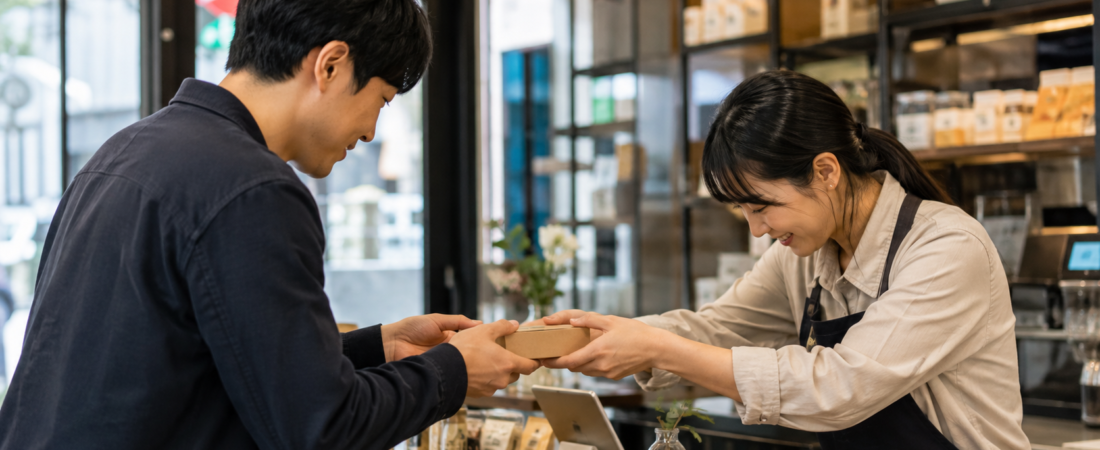
Using two hands can be a polite gesture when giving or receiving something in Korea, especially in more formal situations.
For example, people may use both hands when giving a business card, receiving a gift, or handing something to someone older or more senior.
In casual everyday situations, using one hand is often completely normal.
As a visitor, you do not need to use two hands every time you pass something to someone. But in a more formal situation, it is a simple gesture that can show respect.
If you are unsure, following the other person’s lead is usually a good approach.
What About Shoes Indoors?
In Korean homes, it is normal to remove your shoes before entering the main living area.
You may also be asked to remove your shoes at some traditional restaurants, guesthouses, temples, or other places with floor seating.
If you see a shoe rack, slippers, or other people taking off their shoes near the entrance, that is usually a good sign that you should do the same.
You do not need to guess every time. Just look at what the people around you are doing and follow the setup of the space.
Keeping a pair of clean socks can also be useful if you expect to visit places where shoes are removed.
Is It Okay to Speak English?
Yes. As a visitor, it is completely fine to speak English when you do not know Korean.
In tourist areas, hotels, major transportation hubs, and many restaurants, you may find staff who can communicate in at least some English.
In other situations, communication may be more limited, but simple words, gestures, menus, and translation apps can usually help.
You are not expected to speak Korean perfectly. Even learning a few basic expressions such as “Annyeonghaseyo” (안녕하세요) for hello and “Gamsahamnida” (감사합니다) for thank you can make everyday interactions feel a little warmer.
The most important thing is simply to communicate politely and patiently.
A Few Things You Do Not Need to Worry About
Korean etiquette can sometimes look very formal from the outside, but visitors are generally not expected to know every custom.
You do not need to bow deeply every time you meet someone, memorize complex honorifics, or worry about making a small mistake in an unfamiliar situation.
Most people will understand that you are visiting from another country.
A polite attitude, basic consideration, and willingness to follow the situation are usually enough.
If you are unsure what to do, simply observe the people around you and follow their lead.
The Bottom Line
Korean etiquette does not need to feel intimidating.
A friendly greeting, basic awareness of the people around you, and a little respect for the situation will take you a long way.
You do not need to understand every social rule or follow every traditional custom perfectly.
Pay attention to how people around you behave, stay polite, and do not worry too much about small mistakes.
For most first-time visitors, that is more than enough.
New to Korea? Korea, Actually explains the practical things about Korea that are surprisingly difficult to find clear answers to.