You do not need to memorize a long list of Korean etiquette rules before your trip.
For most everyday situations, a better approach is to start politely, watch what the people and place are telling you, and adjust. A small greeting, a slightly formal tone with someone you have just met, and attention to signs or host instructions will carry you much further than trying to perform ceremonial customs perfectly.
Most ordinary mistakes are also easy to fix. If you miss a cue, correct it and move on.
What actually matters most
Korean etiquette changes with context.
A home, a casual restaurant, a hosted meal, a subway car, and a formal meeting do not all use the same level of formality. Instead of asking, “What is the Korean rule for this?” look first at:
- who you are with
- how formal the situation feels
- what the host or staff is doing
- what the signs or space indicate
When you are unsure, starting slightly more politely is usually easier than trying to master every social distinction in advance.
Greetings do not need to be complicated
For ordinary visitor interactions, a polite verbal greeting with a small bow or nod is enough.
You do not need to calculate a bow angle or perform a deep formal bow in everyday situations.
In more formal settings, people may use a handshake or a more noticeable bow, but first-time visitors do not need a full bowing system for normal travel.
If you forget to bow, simply continue the interaction politely.
Age changes formality, not every interaction
Age, seniority, and relationship can affect Korean speech levels and how formal an interaction feels.
That does not mean you need to ask everyone’s age or understand the full honorific system.
With someone you have just met, begin with a polite tone and let the situation guide you.
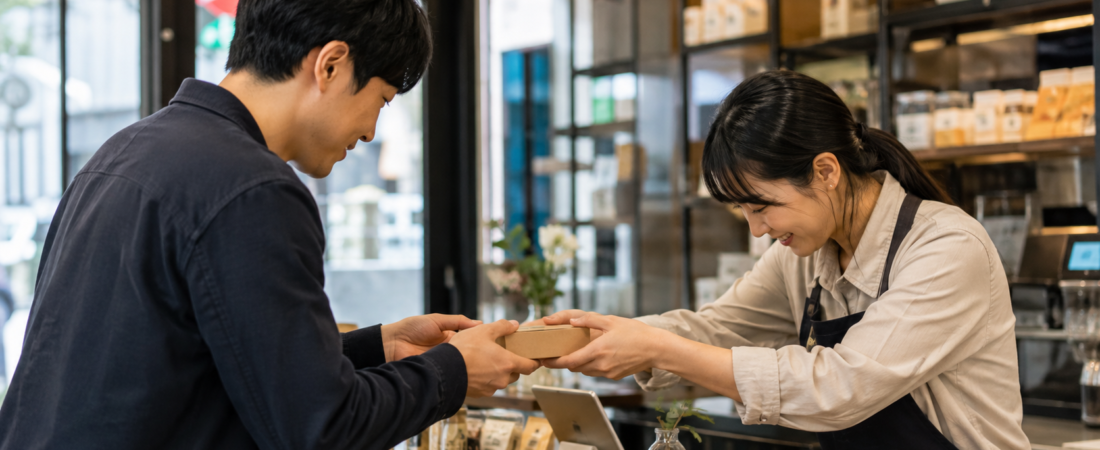
Using two hands to give or receive something can also signal extra politeness in a formal or seniority-marked context, but it is not mandatory in every everyday transaction.
The useful skill is recognizing that formality can change—not memorizing a hierarchy chart.
At the table, follow the situation
Korean meals commonly use both a spoon and chopsticks, so follow the table setup rather than worrying about one rigid utensil rule.
If serving utensils are provided for shared dishes, use them. If the meal is hosted or clearly formal, following the host’s timing is more useful than applying one universal rule about who must eat first.
Detailed customs vary by restaurant and meal type, so How to Eat at a Korean BBQ Restaurant, bunsik, pocha, cafés, and metal chopsticks are better handled as separate first-use topics.
Tipping is generally not expected in ordinary restaurants or taxis in Korea. More specific exceptions belong in the dedicated tipping guide.
If you use the wrong utensil or miss a table cue, switch and continue. There is usually no reason to turn a small mistake into a formal apology.
Be considerate in shared public spaces
On public transportation, keep personal audio from becoming everyone else’s audio.
Use earphones and keep calls or conversations at a considerate volume.
Respect clearly marked priority seating and the signs explaining who it is intended for. If someone who needs the seat is present, yield it.
One older travel tip is worth ignoring: do not treat “stand on one side so people can walk on the escalator” as a Korean etiquette rule. Current safety guidance is to stand within the marked area, hold the handrail, and avoid walking or running on the escalator.
For photography, avoid taking close-up photos of people without permission and follow explicit rules in private or sensitive facilities.
Know when shoes come off
A Korean home is a strong shoes-off default.
At the entrance, look for cues such as:
- a step or raised floor
- a shoe rack or shoe area
- indoor slippers
- the host removing their shoes
Outside homes, do not assume every indoor space is shoes-off. Ordinary cafés, shops, museums, and many chair-seating restaurants use normal footwear.
Traditional or floor-seating spaces may have a shoes-off boundary, so follow the actual entrance and seating setup.
The cultural background and venue-specific exceptions belong in Why Do Koreans Take Their Shoes Off Indoors?
What to do if you make a mistake
Recovery is usually small and practical.
If you forget to bow, continue politely.
If your tone is too casual for the situation, switch to a more polite one.
If you step into a shoes-off area wearing shoes, step back, remove them, and follow the host or staff cue.
If you are too loud on transit, lower your voice or use earphones.
If a venue rule is unclear, follow the sign, host, or staff instruction rather than a generic etiquette list.