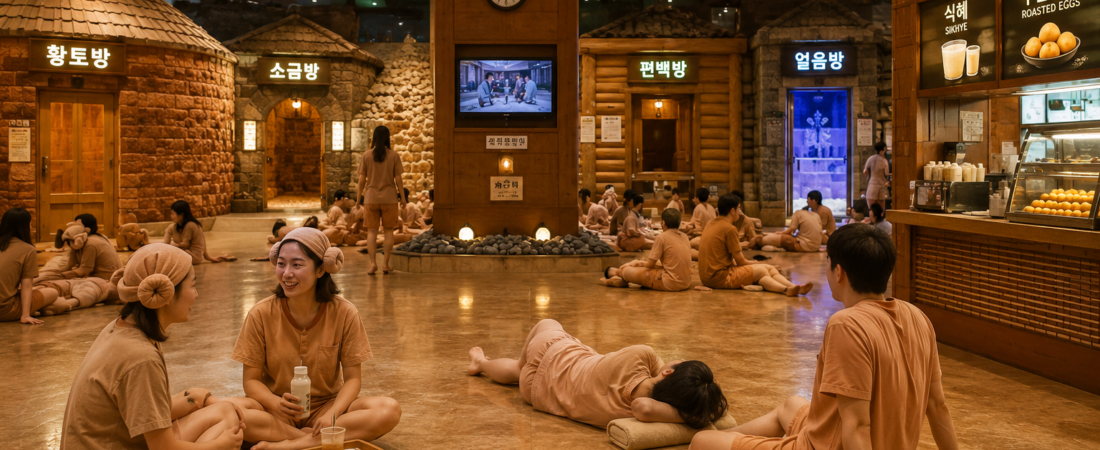
A jjimjilbang is more than a Korean sauna. A useful way to understand it is as a bath-and-relaxation complex with two different kinds of space:
- a gender-separated changing and bathing area
- a shared jjimjil or rest area where visitors can relax together
That distinction matters because the privacy, clothing, and behavior rules are different in each zone.
A practical first-visit mental model is:
- check the exact facility and its rules
- pay or check in
- store your shoes
- use the changing-room locker
- wash before entering the shared baths
- change into jjimjil clothes before entering the common rest area, if that facility uses them
- follow the facility’s food, payment, and privacy rules
- settle any extra charges and retrieve your belongings before leaving
The exact key, locker, payment, and clothing system varies by facility, so treat this as a guide to the flow rather than one fixed national procedure.
Know the difference between the bath area and the common area
The bathing and changing areas are separate by gender.
The common jjimjil or rest area is different. This is the part where families, friends, or couples may be able to spend time together, depending on the facility.
Do not carry the clothing rules from one zone into the other.
In the changing and bathing area, follow the facility’s bathhouse setup and privacy rules. In the shared jjimjil area, visitors typically use designated jjimjil clothes when the facility provides or requires them.
Large spa complexes can add pools, family areas, private facilities, or ticket-specific zones, so follow the signs for the place you are actually visiting.
Check hours and access rules before you rely on them
Jjimjilbang rules are not identical nationwide.
Some facilities operate 24 hours, while others close at night. A 24-hour listing also does not automatically mean you can use the jjimjilbang as a hotel or sleep there without restriction.
If you plan to stay late, check:
- closing time
- maximum-use time
- night or overnight policy
Child and guardian rules also vary by facility.
Tattoo policies vary too. Some facilities or zones may require visible tattoos to be covered, while others use different rules.
If either issue matters to your visit, check the facility’s current policy before arriving rather than relying on a Korea-wide rule.
Follow the locker flow, but do not expect one key system everywhere
A common pattern is:
- store your outdoor shoes
- enter the changing area
- place clothes and belongings in an assigned locker
- keep the key, wristband, or locker device secure
Some facilities use matching shoe-locker and changing-locker numbers. Others use separate keys, electronic wristbands, chips, or another system.
Follow the assigned number and instructions rather than assuming the locker system will match a jjimjilbang you used before.
If you cannot find the correct locker or lose the key or wristband, stop and ask the front desk instead of trying to force another locker.
Wash before using the shared baths
Before entering the communal baths, shower and wash first.
That is one of the most useful first-time rules to know.
You do not need to turn the visit into a long bathing-etiquette checklist. The essential point is to wash before entering the shared bath water and then follow the local signs and staff instructions.
If you are unsure which area to enter, ask. The changing, bathing, and common jjimjil zones do not use the same privacy or clothing rules.
Change into jjimjil clothes for the common rest area
After using the bath area—or whenever the facility’s flow directs you there—you may move into the shared jjimjil or relaxation area.
Many facilities provide designated clothes for this zone, but what is included in the admission price varies.
Towels, soap, shampoo, toiletries, and jjimjil clothes may be included, rented, sold separately, or handled another way.
Check what the facility provides instead of assuming everything is free.
The shared area may include heated rooms, floor-rest spaces, food or snack facilities, and other amenities. Use them according to the posted rules for that facility.
Protect privacy and keep your payment record clear
Treat locker rooms, changing areas, and bathing areas as strict privacy zones.
Do not take photos or videos there.
Common-area photography may have different rules, but even where it is allowed, avoid photographing other guests without permission.
Food courts, snack bars, or extra services may be available. Some facilities charge purchases to a wrist key or similar device and settle the total when you leave; others use direct payment.
If an extra charge or payment status is unclear, ask the counter to check it before paying again.
Before leaving:
- settle any remaining charges
- empty the changing-room locker
- return any key or wristband as instructed
- retrieve your shoes
- make sure you have all your belongings